Stop Planning Events. Start Designing Behaviour.
Why exhibitions and venues should move beyond event planning and design visitor behaviour through gamified discovery.
If exhibitions are designed only as schedules and floor plans, organisers leave movement to chance. Behaviour-led design gives visitors a reason to explore.
Stop planning events.
>
Start designing behaviour.
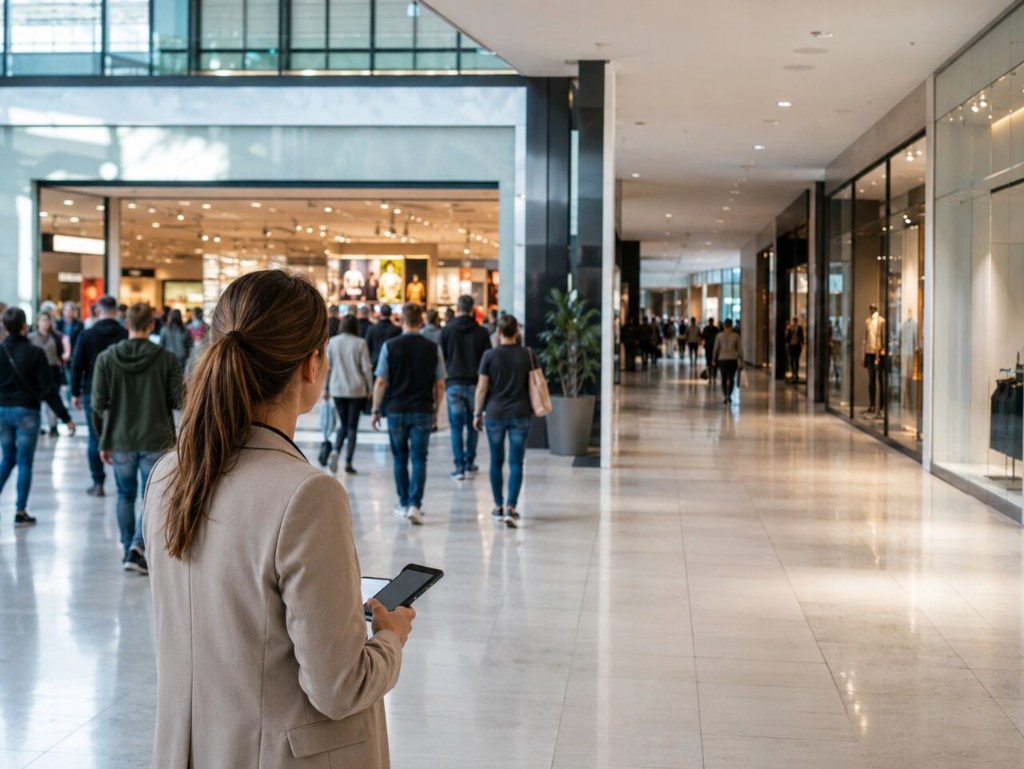
It sounds like a small shift in language, but it changes the way an exhibition, trade show, shopping centre activation or destination experience is built. Instead of asking, "What do we need to put on?" the better question becomes, "What do we want people to do, and what will actually make that happen?"
That question matters because many physical experiences are still planned as a checklist. Registration desk. Keynote area. Networking slot. Exhibitor stands. Food and drink. Directional signage. A map. Perhaps a few announcements encouraging visitors to "explore the floor".
On paper, everything is present. In practice, people often move in predictable and uneven ways. They visit the obvious areas. They follow the crowd. They stop at the stands or stores they already recognise. They miss quieter corners. They leave some exhibitors, tenants or zones struggling for attention while others absorb the majority of the footfall.
That is not usually because the audience is disengaged. It is because the experience has not been designed to shape behaviour.
The problem with leaving movement to chance
Foot traffic is not the same as meaningful exploration.
An exhibition hall, retail destination or mixed-use venue can be busy and still feel unbalanced. Entrances may be crowded while back corners remain quiet. Anchor brands may attract attention while smaller tenants are overlooked. Visitors may spend time in the central areas without discovering what else is available.
Traditional event planning often assumes that if something is visible, people will find it. But visibility is not always enough. A stand, store or activation can be present on the floor plan and still be ignored by visitors who have no clear reason to go there.
Signage helps, but signage alone rarely changes behaviour. A sign can point the way, but it does not necessarily create motivation. A map can show what exists, but it does not create curiosity. A schedule can tell people what is happening, but it does not always encourage them to move through the whole environment.
This is where organisers need to think less like schedulers and more like experience designers.
Start with the behaviour you want
A behaviour-led approach begins with clarity. What should visitors actually do?
Do you want them to move beyond the main entrance area? Visit a wider range of exhibitors? Spend longer on site? Discover new tenants? Engage with sponsors? Explore quieter zones? Return to areas they might otherwise skip?
These are not just operational questions. They influence the entire design of the experience.
If the goal is balanced traffic, the floor plan has to do more than look tidy. It needs to encourage circulation. If the goal is stronger exhibitor or tenant visibility, the visitor journey needs to create reasons to stop, look and interact. If the goal is longer dwell time, the experience needs to offer a sense of progression rather than a single destination.
Once the desired behaviour is clear, the next question is what will prompt it.
People are more likely to explore when there is curiosity, purpose and momentum. They need small reasons to take the next step. They need prompts that feel natural rather than forced. They need an experience that turns movement into part of the visit, not an extra task bolted on at the end.
Attention has a starting point
Every visitor journey begins somewhere. That starting point matters.
At an exhibition, it might be registration. In a shopping centre, it might be the main entrance, transport link or car park. At a leisure destination, it might be the food court, reception area or central atrium.
These first moments are powerful because they set the tone for what people think the experience is. If the environment immediately presents itself as passive, visitors are likely to behave passively. They will follow familiar paths, look for the obvious attractions and make quick decisions about what deserves their time.
Behaviour design asks: how can we use that early attention well?
This does not mean overwhelming visitors with instructions. It means creating a simple, accessible reason to begin exploring. The best prompts are easy to understand, easy to join and clearly connected to the physical environment.
That is why gamified discovery can be so effective. It gives visitors a starting point and a reason to move with intention.
Exploration needs prompts, not pressure
The word "gamification" can sometimes be misunderstood. It does not have to mean gimmicks, distractions or novelty for the sake of it. Used well, it is a design tool.
A scavenger hunt, for example, can prompt visitors to notice places they might otherwise walk past. It can guide movement without making the journey feel rigid. It can encourage people to look more closely at stands, stores, displays or areas of the venue. It can turn a passive walk through the space into active discovery.
The important point is that the activity gives people a reason to move, look and keep going.
That reason does not need to be complicated. In fact, simplicity is an advantage. If visitors have to download an app, create an account or spend several minutes working out how to take part, participation can drop before it begins. For busy exhibitions and high-footfall venues, the experience needs to be low-friction.
Gonow Play is designed around that principle: an AI-powered scavenger hunt that helps drive foot traffic, increase dwell time and give every tenant a reason to be discovered, with no app download required.
The value is not in adding a game on top of the experience. It is in using the game mechanics to support the behaviour the organiser already wants to encourage.
Quieter areas need intentional design
One of the common challenges in any physical environment is uneven attention.
Some areas naturally benefit from location. They sit near entrances, escalators, keynote stages, anchor tenants or main corridors. Other areas have to work harder. They may be tucked away, positioned deeper into the floor plan or located away from the most obvious route.
A behaviour-led experience does not simply accept that imbalance. It asks how visitors can be encouraged to travel further.
This is where discovery mechanics can play a practical role. By placing moments of interaction across different zones, organisers can create reasons for visitors to move beyond the busiest routes. The journey can be designed to pull people into quieter areas and give them a purpose once they arrive.
For exhibitors and tenants, that matters. Being present is not the same as being discovered. A stand or store needs attention, but it also needs context. A visitor who arrives because they are following a discovery journey may be more open to noticing what is there than someone simply walking past on the way to somewhere else.
Again, this is not about forcing traffic. It is about shaping movement in a way that feels natural and rewarding.
Data should support better decisions
Behaviour design is also about learning.
If organisers want to improve visitor journeys, they need to understand how people engage with the environment. Which areas attract interaction? Which routes feel natural? Where do people drop off? Which prompts encourage continued exploration?
A well-designed digital discovery layer can help capture useful engagement signals along the way. That data should not be treated as a vanity add-on. It should help organisers see whether the experience is supporting the behaviours they care about.
For example, if the aim is to increase discovery across a wider number of tenants or exhibitors, the organiser needs a way to understand participation and movement patterns. If the aim is to improve dwell time, they need to think about what keeps visitors engaged across the journey. If the aim is to create stronger sponsor or exhibitor value, they need to consider how those partners are woven into the experience rather than simply placed on the map.
The key is to connect the data back to the original behavioural goals.
Less hoping, more shaping
The old model of event planning relies heavily on hope.
Hope that visitors will read the map. Hope that they will walk down every aisle. Hope that signage will be enough. Hope that quieter areas will still receive attention. Hope that exhibitors and tenants will feel the value of being there.
Hope is not a strategy.
A behaviour-led approach is more deliberate. It recognises that people need cues, motivation and momentum. It accepts that the physical layout alone will not always produce the desired outcome. It designs the visitor journey around the actions that matter.
This does not mean every experience should feel over-engineered. The best behaviour design is often almost invisible. Visitors simply feel that there is something to do, somewhere to go and a reason to continue. The organiser, meanwhile, has created a structure that supports movement, discovery and engagement.
That is the shift.
Less static. More movement.
Less hoping. More shaping.
From event planning to behaviour design
Events, exhibitions and destinations will always need operational planning. Registration still matters. Schedules still matter. Signage still matters. Floor plans still matter.
But these elements are not enough on their own.
If the goal is balanced traffic, longer dwell time and stronger visibility for exhibitors or tenants, the experience needs to be designed around behaviour. It needs to consider where attention starts, what prompts exploration, how quieter areas are brought into the journey and what can be learned from visitor engagement.
Gamified discovery earns its place when it serves those goals. Not as a gimmick, but as a practical way to give people a reason to move, look and keep going.
For Gonow Play, that is exactly the role of the scavenger hunt: turning passive footfall into active exploration, without an app download.
Because the future of physical experiences is not just about planning what happens.
It is about designing what people do next.
About the Author
Jason Leven is CEO and Co-Founder of GoNow Productions, a GEO and AI digital agency based in Barcelona. He has 25+ years of experience in software development, digital search, and SEO across 21 countries. LinkedIn →
GoNow Productions produces this content and offers commercial services in AI search optimisation for retail.
Related Articles
Build the Prototype Before You Build the Team
Hiring a development team too early can turn an untested idea into an expensive commitment. A working prototype helps founders learn what matters before they scale.
Optimisation Is Not a Tidy-Up
Campaign optimisation is often treated like a quick clean-up when results dip. In reality, it works best as a steady rhythm of learning, testing and improvement.